
What’s the Difference Between Interpreter Scheduling and Management Software?

Hospitals, courts, schools, and language service providers all rely on interpreters to deliver accurate communication. But making those services run smoothly requires more than just having interpreters available—it depends on how well scheduling and operations are managed.
Many people assume that interpreter scheduling software and interpreter management software are the same thing. While they share some similarities, they serve very different roles.
Scheduling software focuses on booking appointments and tracking availability, while management software takes a broader approach, covering compliance, billing, on-demand services, and performance reporting.
Recognizing the difference helps organizations choose a solution that truly fits their needs, whether they’re coordinating a small pool of interpreters or managing hundreds of assignments across multiple sectors.
Is Interpreter Software Worth It for Small LSPs?

Small language service providers (LSPs) often face a unique challenge, delivering professional interpreting services with limited staff, tight budgets, and growing client expectations. Unlike large agencies with dedicated scheduling teams and complex infrastructures, smaller providers must balance efficiency with affordability.
This raises an important question, is interpreter software worth it for small LSPs?
The short answer is yes. Interpreter software, when designed to be flexible and scalable can save small LSPs significant time and money while helping them compete with larger agencies.
Platforms like Interpreter IO make it possible for even the smallest teams to manage bookings, interpreters, and clients more effectively, without overwhelming overhead.
Can Interpreter IO Help Forecast Interpreter Demand?

Missed appointments, overworked interpreters, and wasted time slots are the hidden costs of relying on spreadsheets, phone calls, or guesswork to manage interpreter demand.
Hospitals see sudden spikes in emergency requests, courts face last-minute calls for certified interpreters, and schools scramble to cover dozens of languages during parent-teacher meetings. Without accurate forecasting, organizations lose time, revenue, and client trust.
Interpreter scheduling is no longer just about filling appointments, it’s about being prepared. Demand fluctuates by language, time of day, and even season, and manual methods simply can’t keep up.
To stay ahead, organizations need a smarter, data-driven way to predict when and where interpreters will be needed. Modern interpreter management platforms, like Interpreter IO, make this possible by combining seamless scheduling with powerful forecasting tools.
Does Interpreter IO Allow Calendar Integration?
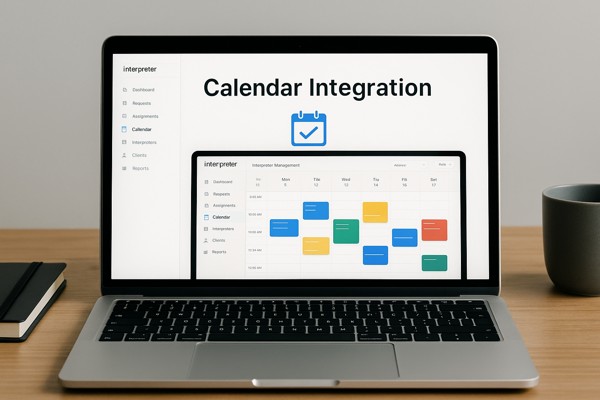
For organizations that depend on interpreters whether in healthcare, courts, schools, or corporate environments, scheduling can quickly become overwhelming. Administrators often manage dozens, if not hundreds, of bookings each week, and even the smallest oversight can lead to double bookings, missed appointments, or hours lost to email confirmations.
Calendar integration has become one of the most valuable features of modern interpreter management platforms. By syncing interpreter assignments directly with Google Calendar, Outlook, or iCal, organizations can reduce errors, save time, and give both staff and interpreters greater confidence in their schedules.
So, does Interpreter IO allow calendar integration? The answer is yes and it goes beyond simple syncing to provide a smarter, more connected way to manage interpreter scheduling.
How Does Interpreter IO Compare to Other Interpreter Platforms?
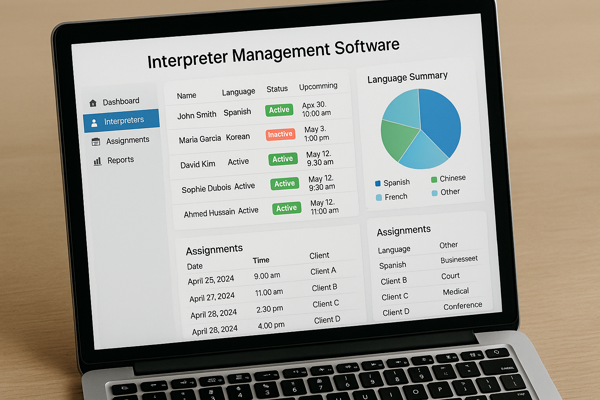
The demand for interpreter management solutions has grown significantly as organizations seek faster, more reliable ways to manage multilingual communication. From healthcare providers and courts to language service providers (LSPs) and schools, interpreter platforms are now essential for streamlining scheduling, improving compliance, and ensuring interpreters are matched effectively with clients.
But with so many options on the market, how do you know which system is the right fit?
Interpreter IO stands out by going beyond standard scheduling and communication tools. Unlike many interpreter platforms, it delivers a flexible, scalable, and compliance-focused solution that’s built around the real-world needs of both organizations and interpreters.