
How Does Interpreter Scheduling Software Work?
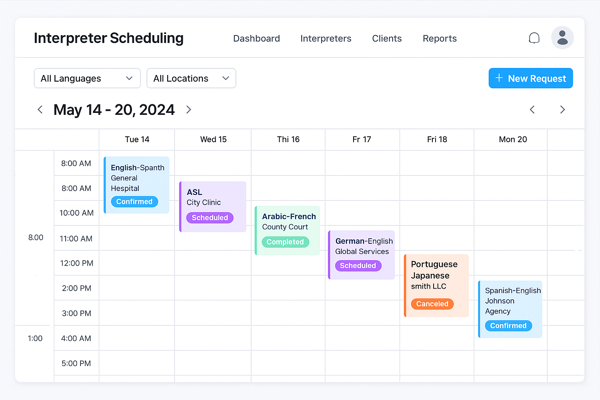
Managing interpreter schedules used to mean endless phone calls, emails, and spreadsheets.
Administrators had to track interpreter availability, assign jobs manually, and hope nothing slipped through the cracks. For hospitals, courts, schools, and language service providers (LSPs), this process was time-consuming, prone to errors, and often left both clients and interpreters frustrated.
Interpreter scheduling software streamlines the entire process by automating how jobs are created, assigned, and managed. Instead of chasing updates or juggling spreadsheets, administrators gain a single, organized system that handles bookings, reminders, billing, and reporting all in one place.
If you’ve ever wondered how this kind of software actually works behind the scenes, here’s a closer look at what happens from the moment an interpreter request comes in to the point the job is completed and recorded.
What Is Interpreter Scheduling Software?
Interpreter scheduling software is a digital system that helps organizations book, assign, and manage interpreter appointments efficiently. It replaces traditional manual scheduling methods with an automated, centralized process that ensures interpreters are assigned to the right jobs at the right time.
Whether it’s an in-person court hearing, a hospital consultation, or a video remote interpreting (VRI) session, the software keeps everything organized in one place.
Core Purpose
- Simplify scheduling and job assignment.
- Eliminate double bookings or missed appointments.
- Improve communication between coordinators, interpreters, and clients.
- Provide transparency through real-time updates and reporting.
How Interpreter Scheduling Software Works
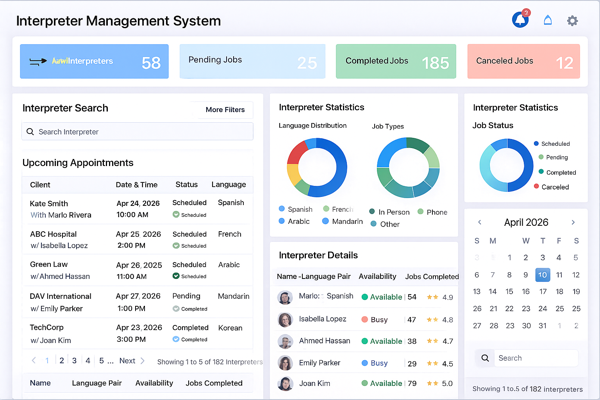
While every platform varies slightly, most follow a similar workflow designed to automate scheduling while maintaining human oversight.
Here’s a step-by-step breakdown of how it works:
1. Job Request Creation
The process starts when a client requests an interpreter. This can be done manually by an administrator or automatically through a client portal.
- Details captured: language pair, location (onsite or remote), date, time, duration, and any special requirements (e.g., NAATI certification, gender preference, security clearance).
- Once submitted, the request is logged into the system and queued for assignment.
This replaces the traditional process of phone calls, sticky notes, and endless email threads.
2. Interpreter Matching
The software uses matching algorithms to identify the most suitable interpreter based on:
- Language proficiency
- Certification and qualifications
- Availability and location
- Specialization (medical, legal, educational, etc.)
- Client preferences or interpreter ratings
Advanced systems like Interpreter IO also factor in past performance data, workload balance, and even cost-efficiency to make smarter matches.
Once a match is found, the system automatically notifies the interpreter for confirmation.
3. Interpreter Confirmation and Notifications
After receiving a job notification (via email, SMS, or mobile app), the interpreter can accept or decline the assignment.
Administrators no longer have to manually call or email multiple interpreters. The platform handles communication instantly and accurately.
4. Calendar Integration
After confirmation, the appointment can be synced with calendars like Google Calendar, Outlook, or iCal, making it easy for both the interpreter and client to stay on schedule.
This ensures:
- No overlapping bookings.
- Real-time visibility of upcoming jobs.
- Automatic reminders to reduce no-shows.
With Interpreter IO, interpreters can view all upcoming jobs from their portal, while administrators have full visibility of the organization’s entire schedule in one dashboard.
5. Real-Time Updates and Job Management
On the day of the assignment, both the client and interpreter can update job statuses directly within the system. For remote sessions, video or phone links are launched directly from the platform.
Key functions include:
- Attendance tracking (start and end times).
- Real-time updates on job progress.
- Rescheduling or cancellations handled automatically with notifications to all parties.
This keeps everyone informed and ensures accurate reporting later on.
6. Automated Billing and Payroll
After a job is completed, the system automatically calculates:
- Interpreter pay (based on agreed rates, hours, or session length).
- Client billing (including travel time, out-of-hours rates, or extra minutes).
Invoices and payment summaries are generated instantly, reducing administrative workload and eliminating calculation errors.
Interpreter IO goes one step further by integrating with accounting software like QuickBooks, making invoicing and payroll management completely seamless.
7. Reporting and Analytics
Interpreter scheduling software doesn’t just handle logistics, it provides valuable insights into operations.
Administrators can access dashboards that show:
- Interpreter utilization rates.
- Job completion and cancellation rates.
- Most requested languages.
- Client activity and spending patterns.
This data helps organizations identify trends, forecast demand, and optimize staffing levels.
Core Features That Make Interpreter Scheduling Software Effective
- Automated Scheduling: Eliminates manual coordination by automatically matching interpreters to assignments.
- Centralized Dashboard: Gives administrators a complete overview of all bookings, interpreters, and clients in one place.
- Custom Booking Forms: Allows clients to request interpreters through branded forms with required fields (language, date, location, etc.).
- Real-Time Notifications: Ensures interpreters and clients receive instant updates about new jobs or schedule changes.
- Mobile Accessibility: Interpreters can manage their assignments on any device, increasing flexibility and response time.
- Integrated Billing & Payroll: Automates invoicing, payment tracking, and expense management to eliminate administrative bottlenecks.
- Compliance & Security: Protects sensitive client data with HIPAA, ISO 27001, and GDPR-compliant systems.
- Reporting Tools: Gives management access to performance metrics, helping with decision-making and long-term planning.
How Interpreter IO Makes Scheduling Even Smarter
While many systems offer basic scheduling features, Interpreter IO is designed to manage end-to-end interpreter operations.
- Unified Platform for All Services: Whether it’s onsite, over-the-phone (OPI), or video remote interpreting (VRI), Interpreter IO lets organizations manage all service types from one central system.
- Advanced Matching Algorithm: The platform uses intelligent automation to match interpreters based on multiple criteria, language, location, skill, and client preferences, ensuring accuracy and fairness.
- Interpreter Portal: Interpreters can log in to accept jobs, track payments, upload compliance documents, and manage their schedules all from a single secure portal.
- Built-In Communication Tools: Automated reminders, notifications, and updates keep everyone aligned, reducing miscommunication.
- Integration-Friendly Design: Interpreter IO connects easily with accounting, HR, and client management systems, providing a unified workflow.
- Security and Compliance: With ISO 27001, HIPAA, and GDPR alignment, Interpreter IO protects interpreter, client, and organizational data end-to-end.
- Analytics and Forecasting: Advanced reports help identify language trends, predict interpreter demand, and optimize performance making scheduling proactive rather than reactive.
Benefits of Using Interpreter Scheduling Software
- Saves Time: Reduces manual admin work by up to 70%.
- Prevents Errors: Eliminates double bookings and missed appointments.
- Improves Interpreter Engagement: Transparent, automated systems make interpreters’ jobs easier.
- Boosts Client Satisfaction: Fast response times and reliable coverage build trust.
- Enhances Compliance: Digital records, audit trails, and encryption ensure data protection.
- Supports Growth: Scales easily as your interpreter pool and client base expand.
Ready to Streamline Your Interpreter Scheduling?
Interpreter scheduling software is more than a convenience, it’s the backbone of efficient, reliable, and scalable language access operations. It ensures the right interpreter is available at the right time while automating everything from booking and billing to reporting and compliance.
With Interpreter IO, your organization can go beyond basic scheduling and gain a fully integrated interpreter management solution built for growth, accuracy, and peace of mind.
Book a Demo with Interpreter IO today to see how our scheduling technology can transform the way you manage interpreters.