
Do Interpreters Need Technical Knowledge to Use an Interpreter Management Platform?

For many interpreters, technology can feel intimidating. New systems, online portals, and digital tools might sound like they require a steep learning curve, especially for professionals who are used to managing assignments through emails, texts, or phone calls.
So it’s no surprise that one of the most common questions interpreters ask before using a new system is: “Do I need to be tech-savvy to use an interpreter management platform?”
The good news is not at all. Interpreter management platforms, like Interpreter IO, are designed with interpreters in mind. They’re built to be intuitive, easy to navigate, and supportive, so users can focus on what they do best, delivering accurate, high-quality interpreting services without worrying about complex technology.
What Is an Interpreter Management Platform?
An interpreter management platform is a system that automates and organizes all interpreter-related operations from scheduling and communication to billing, compliance, and reporting.
For interpreters, it serves as a one-stop portal where they can:
- View available jobs and accept assignments.
- Track upcoming bookings on their calendar.
- Access job details, client requirements, and session instructions.
- Upload timesheets, invoices, or compliance documents.
- Join virtual sessions directly via video or phone links.
- Monitor payments and completed jobs.
It replaces a dozen emails or phone calls with a simple online workflow.
The Reality: You Don’t Need to Be “Tech-Savvy”
Interpreters are skilled communicators. Their expertise lies in language, cultural understanding, and accuracy, not in learning software systems.
But with the growing demand for digital transformation in language services, interpreters are expected to use online tools for scheduling, reporting, and even remote interpreting.
The fear of “technical complexity” can sometimes hold interpreters back from embracing these tools. But in reality, modern interpreter platforms make the process simpler, not harder.
Modern interpreter management platforms are intentionally built to be user-friendly even for interpreters with limited technical experience.
Let’s explore how interpreter management systems work, why they’re designed for ease of use, and what kind of technical knowledge (if any) interpreters actually need.
Here’s why:
1. Intuitive Interfaces
You don’t need to know coding or advanced software skills. Most systems use clean, simple layouts that feel familiar, much like checking an email inbox or using a smartphone app.
For example, Interpreter IO has a clear dashboard showing upcoming jobs, notifications, and interpreter tools in one view. Buttons are labeled clearly (“Accept Job,” “Upload Document,” “Join Call”) making navigation straightforward.
2. Mobile-Friendly Access
Many interpreters work on the go. That’s why modern platforms are mobile-responsive or available as apps. You can log in from a phone or tablet and manage assignments anywhere, no desktop setup required.
3. Automated Communication
Instead of manually confirming jobs or chasing details, the system sends automatic notifications for new bookings, schedule updates, or payment confirmations. Interpreters just need to read and respond, not configure settings.
Common Technical Skills Interpreters Already Have
Many interpreters underestimate how much technical experience they already use daily. If you can:
- Send an email or text message,
- Use Zoom, Teams, or Google Meet,
- Check your schedule on a phone calendar, or
- Upload a document attachment,
…then you already have all the technical knowledge needed to use an interpreter management platform.
These systems are designed around the same principles as the tools interpreters already rely on — communication, scheduling, and accessibility.
Key Features That Make Interpreter Platforms Easy to Use
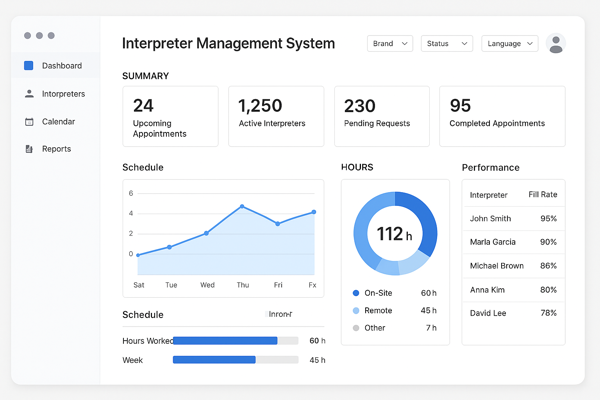
To better understand how approachable these platforms are, let’s look at the features interpreters use most often and how they simplify, not complicate, their work.
1. Interpreter Dashboard
The dashboard is your control centre. Once logged in, interpreters can see:
- Upcoming and completed jobs.
- New assignment offers.
- Job details (language, time, location, client, rate).
Everything is organized neatly, so interpreters never need to dig through emails or spreadsheets again.
2. Job Notifications and Accepting Assignments
When a new job is available, interpreters receive a notification via email or SMS.They can open the offer, review the details, and accept or decline with one click.
No more waiting for phone calls or sending confirmation emails, it’s all automated.
3. Calendar Integration
Once a job is confirmed, it syncs automatically to the interpreter’s personal calendar (Google Calendar, Outlook, iCal).
This helps interpreters avoid double bookings and stay on top of their schedules without manually updating entries.
4. Joining Remote Sessions (VRI/OPI)
For virtual assignments, interpreters don’t have to set up complicated links. They can join directly through the platform with one click. Interpreter IO integrates video and phone interpreting tools securely, eliminating the need to switch between multiple applications.
5. Document Uploads and Compliance Tracking
Interpreters can easily upload certifications, signed timesheets, or invoices through their portal. Most platforms also track expiry dates for compliance documents, sending automatic reminders before anything lapses.
No advanced knowledge required, just drag, drop, and submit.
6. Payment and Invoice Management
Instead of sending separate invoices or waiting for updates, interpreters can view payment statuses in real time. The platform calculates rates based on hours, travel time, or job type automatically.
This transparency gives interpreters full visibility and peace of mind without needing accounting software skills.
Addressing Common Concerns
Even with user-friendly design, some interpreters still worry about adapting to new systems. Let’s address the most common fears and how modern tools overcome them.
1. “I’m not comfortable with technology.”
That’s okay, interpreter platforms are made for people who aren’t. They guide you with clear steps and labels, and if you can use your phone or check your email, you can easily navigate them.
2. “What if I make a mistake?”
The system is designed to be safe. You can’t accidentally delete critical data or break anything. Most actions include confirmation pop-ups and undo options to prevent errors.
3. “I prefer human communication over software.”
Interpreter management systems don’t replace human connection, they enhance it. Administrators still communicate directly with interpreters but spend less time on repetitive coordination tasks.
4. “Will I get support if I need help?”
Yes. Reliable platforms like Interpreter IO offer training resources, onboarding support, and responsive customer service. You’re never left to figure it out alone.
How Interpreter IO Makes It Even Easier for Interpreters

Interpreter IO was built to empower interpreters, not overwhelm them. Everything about the platform is designed for simplicity, accessibility, and flexibility.
Here’s how it makes the experience stress-free:
- Clean, intuitive design: A visual dashboard that shows exactly what you need — no clutter.
- One-click job management: Accept, decline, or view job details instantly.
- Mobile access: Manage everything on the go via phone, tablet, or laptop.
- Automatic updates: No need to chase job changes — notifications keep you informed.
- 24/7 access: Check your schedule or payments anytime, anywhere.
With Interpreter IO, interpreters of all experience levels from newcomers to seasoned professionals can manage their entire workload effortlessly.
The Bigger Picture: Why Embracing Technology Matters
Technology in the interpreting industry isn’t replacing interpreters, it’s helping them work smarter.
By learning to use interpreter management platforms, interpreters gain:
- More job opportunities (instant notifications for new assignments).
- Better time management (fewer scheduling conflicts).
- Faster payments (automated payroll and billing).
- Improved work-life balance (less admin, more interpreting).
And for organizations, working with interpreters who use modern systems means smoother coordination, higher reliability, and faster response times.
In today’s digital-first environment, having basic familiarity with technology isn’t an obstacle — it’s an advantage.
Ready to Simplify Your Interpreting Work?
You don’t need to be a tech expert to use interpreter management software. All you need is a willingness to explore a simpler, more efficient way of working.
Platforms like Interpreter IO are built for interpreters of all backgrounds, intuitive, mobile-friendly, and fully supported.
With one easy-to-use system, you can manage assignments, update availability, track payments, and even join virtual sessions, all without juggling emails or spreadsheets.
Book a Demo with Interpreter IO today and see how easy it is for interpreters to work smarter, not harder.